This guide is written for private dental practices in the United States and Canada. Adapt terminology, privacy procedures, advertising claims and patient communication to the federal, state, provincial and professional rules that apply to your practice.
Quick answer
A dentist should post Instagram content that makes the practice easier to understand and trust: patient education, service explanations, review prompts, team content, reminders, seasonal campaigns, and simple calls to book or call the clinic.
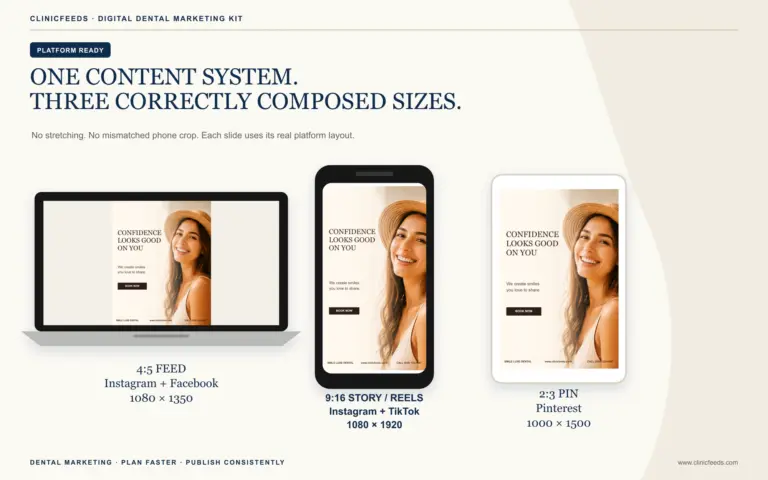
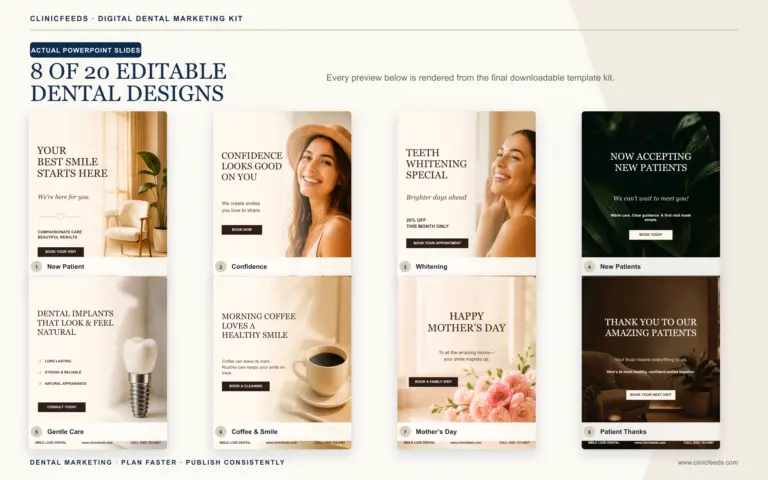
Turn these ideas into finished Instagram content: the Smile Luxe Dental Kit includes 20 editable 4:5 Feed posts and 20 matching 9:16 Story/Reels layouts, with a 30-day Excel planner for captions and publishing. See the Instagram-ready dental kit.
A dentist should post Instagram content that helps prospective and existing patients understand the practice: patient education, appointment reminders, service explanations, team introductions, review requests, and seasonal campaigns. The goal is not to chase every trend. It is to make the practice easier to understand, easier to trust, and easier to contact.
Instagram is a format decision, not a full strategy
Instagram can be useful for dental practices, especially when the visuals are polished and the message is easy to grasp quickly. But the channel works best when each post has a job. A carousel can teach, a Story can remind, a Reel can introduce the office, and a feed post can support a campaign.
Post categories that fit dental Instagram
Educational carousels
Carousels are useful when a topic needs more than one sentence. A practice might explain what to expect during a first visit, how to prepare for a whitening consultation, or why preventive visits matter. Keep the language general and encourage patients to contact the clinic for personal advice.
Service-awareness posts
Service posts should explain availability and context without implying a guaranteed outcome. For example, a whitening post can invite patients to ask about options and suitability. A new patient post can explain the appointment process and what information to bring.
Stories and reminders
Stories work well for appointment reminders, office updates, seasonal prompts, quick polls, and short behind-the-scenes moments. They do not need to be overproduced, but they should still match the clinic’s tone and privacy standards.
Trust and team content
Instagram can make a practice feel more human. Team introductions, care philosophy posts, office photos, and process explanations help people understand the experience before they call.
Examples a dental practice can adapt
- Carousel: “What happens during a new patient exam?”
- Feed post: “Thinking about whitening? Start with a consultation.”
- Story: “A few openings are available this week. Call the office to ask.”
- Team post: “Meet the hygienist who helps patients feel prepared.”
- Reminder post: “If it has been a while since your last visit, contact the office to schedule.”
- Review request post: “If you had a good experience, your honest review helps local patients find us.”
Format guidance
- Use 4:5 feed layouts for high-impact educational or campaign posts.
- Use 9:16 Story layouts for reminders, polls, and appointment prompts.
- Use short captions for simple reminders and longer captions for education.
- Use clear visual hierarchy so the main message is readable on mobile.
- Avoid tiny text, crowded layouts, and unsupported before/after claims.
How Instagram differs from Facebook and Pinterest
Instagram is usually more visual and mobile-first than other channels. A dental office should use simple, readable graphics and captions that make sense even when someone scrolls quickly. Facebook may support longer community updates. Pinterest may work better for evergreen educational graphics. Instagram sits between brand presence, visual education, and timely reminders.
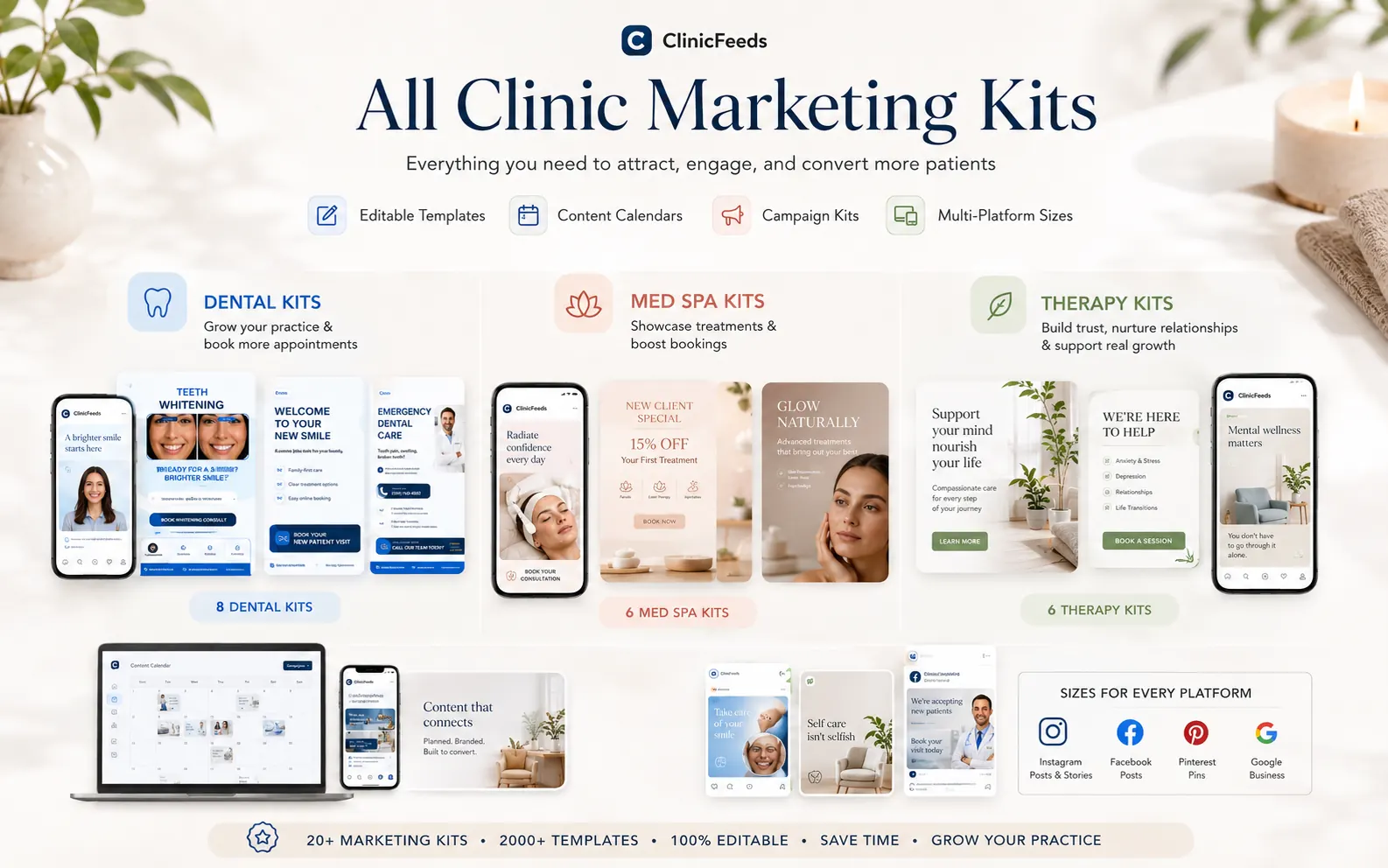
If the clinic wants a broader template path, browse Dental Marketing Kits. For dental-specific resources, explore Dental Social Media Templates.
Caption structure for dental Instagram posts
- Start with the patient question or situation.
- Give one clear explanation in plain language.
- Add the clinic-specific context, such as appointment type or service area.
- Close with a practical next step: call, ask, book, save, or send a message through the clinic’s normal channel.
For example, a whitening post might begin with “Thinking about whitening before an event?” The middle can explain that a consultation helps discuss options and timing. The CTA can invite the reader to contact the office. That is more useful than a vague “book now” post with no context.
What to post when the clinic has no new photos
A clinic does not need new photography for every post. Use polished text-led graphics, simple educational carousels, appointment reminder cards, review request graphics, or process explanations. If using office photos, avoid patient information in the background and make sure any people shown have appropriate permission.
How often should a dentist post?
There is no universal Instagram schedule for every dental office. Start with one, two, or three approved core themes per week based on the team’s drafting and review capacity, then adapt each theme for the placements the practice actually uses. The capacity-based dental social media posting guide explains how to choose a sustainable cadence.
Instagram examples by format
- Carousel: “Five questions patients ask before their first dental visit.”
- Single image post: “Thinking about whitening? Start with a consultation.”
- Story: “Appointment reminder: call the office if you need to reschedule.”
- Short video: a privacy-safe office walkthrough or team introduction.
- Text-led graphic: a simple patient education reminder with one clear CTA.
The format should match the message. If the topic needs steps, use a carousel. If the topic is timely, use a Story. If the goal is trust, show the team or explain the process. If the goal is service awareness, keep the claim conservative and invite the patient to ask the clinic for options.
How to keep Instagram professional but not cold
Dental Instagram content should feel clear, useful, and human. A practice does not need to become a lifestyle influencer account. It can sound professional while still being approachable. Use plain language, real clinic details, and a consistent visual system so the account looks intentional even when posts are produced by a small team.
Common mistakes to avoid
- Posting only dental memes or generic tips.
- Using before/after content without consent, context, or compliance review.
- Making claims that sound like promised results.
- Turning every post into a discount message.
- Copying trends that do not fit the practice’s professional tone.
Implementation checklist
- Choose one Instagram objective for the week: educate, remind, build trust, or promote a service.
- Select the right format: carousel, feed post, Story, or short video.
- Write the caption in the clinic’s voice.
- Add a practical CTA such as call, request an appointment, ask about options, or save this reminder.
- Review the post for privacy, accuracy, and offer details.
For a monthly planning approach, read how to build a dental social media content calendar. You can also explore Dental Social Media Templates for a more structured starting point.
Related Instagram Planning Guides
- Dental Instagram captions
- Dental Instagram Story ideas
- New patient Instagram post ideas
- Build a 30-day dental content calendar
- Dental patient education post ideas
Compliance note
Instagram content should be reviewed for patient privacy, consent, advertising rules, offer terms, and accuracy. This article provides marketing structure only and does not provide clinical guidance.
Use the ready-made dental content system
If your clinic wants the planning structure, editable social templates, captions, and delivery files already organized, view the Smile Luxe Dental Social Media Template Kit or browse the Dental Social Media Content System.
Frequently asked questions
What should a dentist post on Instagram?
A dentist should post patient education, treatment explainers, appointment reminders, review requests, team introductions, seasonal campaigns, and practice updates.
Do dental Instagram posts need to be clinical?
Not every post needs to be clinical. Dental Instagram content should mix education, trust-building, reminders, services, and practice personality while avoiding unsupported medical claims.
Can dental offices use Instagram templates?
Yes. Templates can speed up production and keep the practice visually consistent, as long as the office customizes clinic details, images, offers, and patient-facing language.
Sources And Review Notes
- American Dental Association: Social Media Checklist
- HHS: HIPAA Guidance on Marketing
- RCDSO: Use of Social Media
Last reviewed: July 23, 2026.