
Paid dental advertising works best when the ad, landing page, front-desk workflow, and measurement plan are designed as one system. A polished image can earn a click, but the practice still needs a relevant page, a clear next step, and a team ready to respond.
This guide gives private practices 15 practical dental advertising ideas for paid search, paid social, local media, and community placements. Each idea includes the intended goal, the page it should lead to, the call to action, and the result worth tracking.
Quick answer: start with one service or patient need, one geographic area, one landing page, and one conversion action. Track qualified calls or appointment requests—not impressions alone. Expand only after the clinic can see which campaign produces scheduled and completed visits.
Dental Paid Ads: Choose The Channel By Intent
Google Search ads are best suited to people already looking for a specific dental service or location. Send each tightly grouped ad to a matching service page and measure qualified calls, appointment requests and completed visits.
Facebook and Instagram ads for dentists are better suited to education, local awareness and first-visit introductions. The creative still needs an approved claim, a relevant landing page and a staffed follow-up route; reach and video views are not final practice outcomes.
For most small private practices, test one channel, one landing page and one conversion action before expanding. More channels do not fix a weak offer, unclear page or unstaffed response process.
Advertising Is Not the Same as a Promotion or a Marketing Plan
A dental office marketing plan covers the full system: local visibility, patient communication, reviews, content, retention, and measurement. A dental office promotion is a time-bound campaign or offer. Advertising is the paid distribution used to place a message in front of a selected audience.
Keeping those roles separate prevents a common mistake: paying to amplify a message before the practice has confirmed the offer, landing page, availability, and follow-up process.
Before Spending: A Six-Point Readiness Check
- Confirm the service and capacity. Do not advertise appointment availability, financing, insurance participation, or a promotion until the team has verified the details.
- Name a response owner. Decide who answers calls, monitors forms, and follows up during business hours.
- Build a specific landing page. The page should explain the service or next step promised in the ad instead of sending every click to the homepage.
- Choose one primary action. Call, request an appointment, or request a consultation. Too many equal choices dilute the page.
- Set up useful measurement. Track the path from click to qualified inquiry, scheduled appointment, and completed visit where your systems and consent practices allow it.
- Review platform and professional rules. Healthcare advertising, privacy, testimonials, images, claims, and targeting can carry additional restrictions. Templates are a production aid, not automatic compliance.
15 Dental Advertising Ideas With Clear Conversion Paths
1. Local-Intent Google Search Campaign
Goal: reach people actively looking for a dentist in the practice area. Build tightly themed ad groups around real services and locations, such as family dentistry, preventive care, or cosmetic consultations.
Landing page: a location-relevant service page with the dentist, address, hours, practical first-step information, and a visible phone or request button. CTA: Request an Appointment. Measure: qualified calls, submitted requests, scheduled visits, and completed visits.
2. New Patient Search Campaign
Goal: help prospective patients understand how to start with the practice. Use plain language about the first-visit process rather than vague “best dentist” claims.
Landing page: what to expect, what to bring, team introduction, location, payment or insurance information that the clinic has verified, and booking options. CTA: Plan Your First Visit. Measure: new-patient inquiries and scheduled first appointments.
3. Staffed-Hours Call Campaign
Goal: generate phone conversations when someone is ready to speak with the office. Run call-focused ads only when trained staff can answer or return calls promptly.
Landing page: a concise mobile page with hours, location, services, and a click-to-call button. CTA: Call the Practice. Measure: connected calls of meaningful duration and the number that become scheduled appointments.
4. Urgent Dental Availability Campaign
Goal: make verified urgent-care availability easier to find. Never imply 24/7 access, same-day treatment, or guaranteed availability unless the practice can consistently provide it.
Landing page: symptoms the clinic evaluates, current hours, location, what happens after contact, and clear emergency guidance. CTA: Call About Availability. Measure: qualified urgent-care calls and visits completed.
5. Service Consultation Search Campaign
Goal: support high-consideration services such as implants, aligners, veneers, or whitening consultations. Avoid promising outcomes or presenting treatment as suitable for everyone.
Landing page: candidacy, consultation steps, risks or limitations appropriate to the page, clinician credentials, and realistic next steps. CTA: Request a Consultation. Measure: consultation requests, scheduled consultations, and qualified cases.
6. First-Visit Paid Social Video
Goal: reduce uncertainty for people who have not visited the practice. Use a short, calm video showing arrival, reception, a treatment room, and the team—without exposing patient information.
Landing page: the new-patient page used by the search campaign. CTA: See What to Expect. Measure: landing-page visits, completed video views, inquiries, and appointments—not views alone.
7. Dental FAQ Carousel
Goal: answer one practical question per frame, such as appointment timing, first-visit paperwork, parking, or how the clinic handles consultation requests. Keep clinical answers general and avoid individualized advice.
Landing page: a maintained FAQ page with a route to contact the clinic. CTA: Read the Patient FAQ. Measure: qualified page visits, calls, and form completions.
8. Education-to-Consultation Video Ad
Goal: introduce a service through useful education before asking for an appointment. A dentist might explain the difference between a consultation and a treatment recommendation, or outline questions patients can ask.
Landing page: a detailed service page that matches the video topic. CTA: Learn About the Consultation. Measure: engaged visits, consultation requests, and appointment quality.
9. Seasonal Planning Campaign
Goal: connect a real scheduling window with a relevant patient need, such as planning ahead before travel, school, benefits renewal, or a busy holiday period. Do not create false urgency.
Landing page: current availability and confirmed deadlines, with any offer terms stated clearly. CTA: Check Appointment Options. Measure: inquiries tied to the campaign and the percentage that schedule.
10. Team and Process Credibility Ad
Goal: show how the practice works instead of relying on unsupported superlatives. Feature the team, consultation process, technology in context, accessibility information, or the way questions are handled.
Landing page: an About or first-visit page with verifiable details. CTA: Meet the Practice. Measure: engaged visits, profile views, and assisted appointment requests.
11. Geographic Awareness Campaign
Goal: build familiarity within a realistic service area. Use recognizable, truthful local context such as the neighborhood, transit access, parking, or nearby landmarks.
Landing page: the location page, including accurate hours and directions. CTA: Find the Clinic. Measure: local reach, direction requests, calls, and location-page conversions.
12. Community Event Promotion
Goal: support a genuine community event, information session, screening program, or practice open house where permitted. Clarify what the event includes and what it does not.
Landing page: date, eligibility, capacity, accessibility, privacy information, and registration details. CTA: View Event Details. Measure: registrations, attendance, and follow-up requests.
13. Local Newsletter or Publication Sponsorship
Goal: reach a defined local audience without relying entirely on platform targeting. Choose publications whose readership and geography match the clinic.
Landing page: a simple source-specific page with a relevant introduction and next step. CTA: Learn About the Practice. Measure: referral traffic, tracked calls, inquiries, and cost per qualified inquiry.
14. Authorized Patient Story or Review Creative
Goal: provide social proof through a real, authorized experience. Use written permission where required, preserve the meaning of the review, disclose material connections, and avoid implying that one person’s outcome is typical.
Landing page: a review or case-story page with appropriate context and no unnecessary personal information. CTA: Learn About the Care Process. Measure: engaged visits and assisted inquiries.
15. Privacy-Reviewed Follow-Up Campaign
Goal: reconnect with general website visitors or content viewers only where the platform, local law, and the clinic’s consent and privacy practices permit it. Do not build audiences from sensitive health information or imply knowledge of a person’s condition.
Landing page: a broad educational or practice-introduction page. CTA: Explore Patient Resources. Measure: incremental qualified visits and inquiries, with frequency and privacy controls reviewed.
What a Dental Ad Landing Page Needs
The strongest dental ad ideas fail when the destination does not match the promise. Before launch, check that the page includes:
- a headline that reflects the ad’s service, location, or patient question;
- one clear primary action above the fold;
- verified hours, contact details, address, and service information;
- useful first-step information rather than promotional filler;
- fast mobile loading and readable text without horizontal scrolling;
- privacy information near forms and no request for unnecessary health details;
- appropriate professional, pricing, offer, outcome, and eligibility context;
- a thank-you or confirmation step that tells the patient what happens next.
How to Set a Practical Test Budget
Do not split a small budget across every service and channel. Start with one high-intent campaign and one landing page. Give the campaign enough time and volume to produce a useful signal, but set an agreed review date and stop condition before launch.
Track spend at four levels: cost per click, cost per qualified inquiry, cost per scheduled appointment, and cost per completed visit. The last two usually matter more to practice operations than platform-reported leads. If tracking depends on cookies, phone recording, or personal information, confirm the appropriate consent and disclosure process for the clinic’s jurisdiction.
How to Diagnose an Ad That Is Not Working
- Impressions but few clicks: the search intent, message, or creative may be weak or too broad.
- Clicks but few inquiries: the landing page may not match the ad, may load slowly, or may not answer the patient’s practical questions.
- Inquiries but few scheduled visits: review response time, call handling, eligibility, price expectations, and availability.
- Scheduled but few completed visits: review reminders, confirmation, expectations, and whether the ad attracted the right audience.
- Strong platform metrics but weak practice results: reconcile ad data with the scheduling system before increasing the budget.
When paid calls reach the front desk, use a consistent dental office phone script for new patient calls so the practice can separate lead quality from call-handling friction. After booking, use a documented dental appointment reminder workflow; advertising cannot repair a weak confirmation process.
Advertising Compliance Checks for US and Canadian Practices
Advertising rules vary by platform, province or state, professional regulator, and service. Before publishing, verify that claims are truthful and supportable; credentials and affiliations are accurate; prices and offers include material terms; testimonials and patient images have appropriate authorization; and the ad does not promise a guaranteed or typical outcome without a valid basis.
Google applies additional healthcare and personalized-advertising rules, and some categories or targeting methods may be restricted by location. In the United States, the Federal Trade Commission provides guidance on truthful advertising, endorsements, and reviews. In Canada, provincial dental regulators publish advertising requirements; for example, the Royal College of Dental Surgeons of Ontario treats many forms of public communication as advertising. This article is operational guidance, not legal advice, so the practice should review current rules that apply to its jurisdiction and services.
Turn Approved Messages Into Consistent Creative
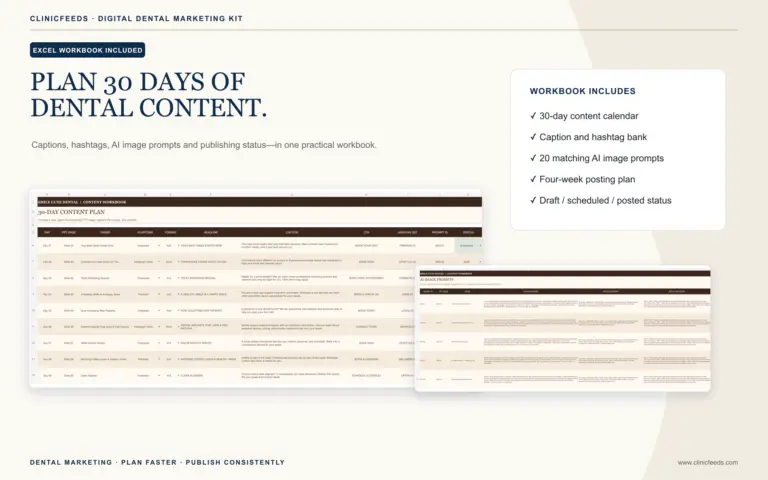
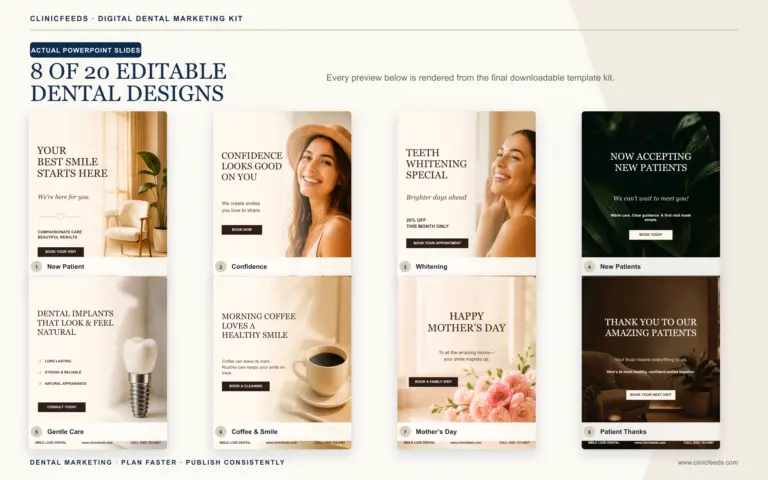
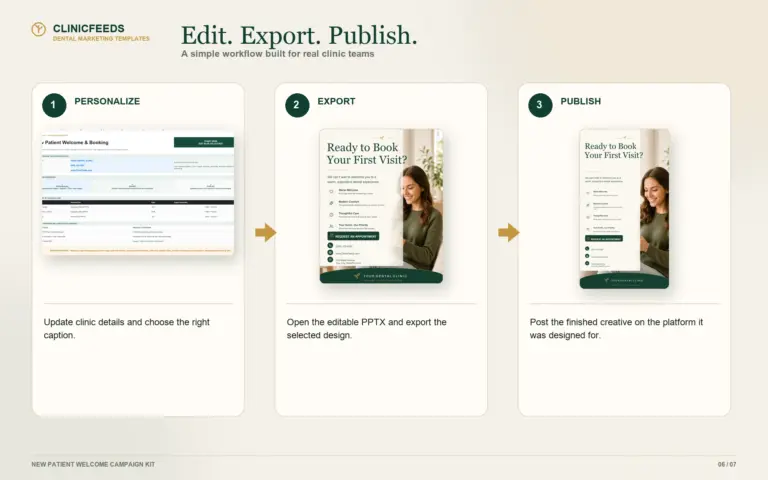
Once the clinic has approved the service details, landing page, and compliance notes, a reusable content system can reduce production time. The New Patient Welcome Campaign Kit can support first-visit education and practice-introduction creative. The Smile Luxe Dental Social Media Template Kit provides broader dental content formats, while the Dental Hygiene & Gum Health Campaign Kit supports preventive-care themes.
These products provide editable layouts, planning resources, and source files. They do not supply ad-platform approval or replace review of claims, privacy, targeting, or professional advertising rules. Compare all current options in the ClinicFeeds kit catalog, or start with the dental content system resource hub.
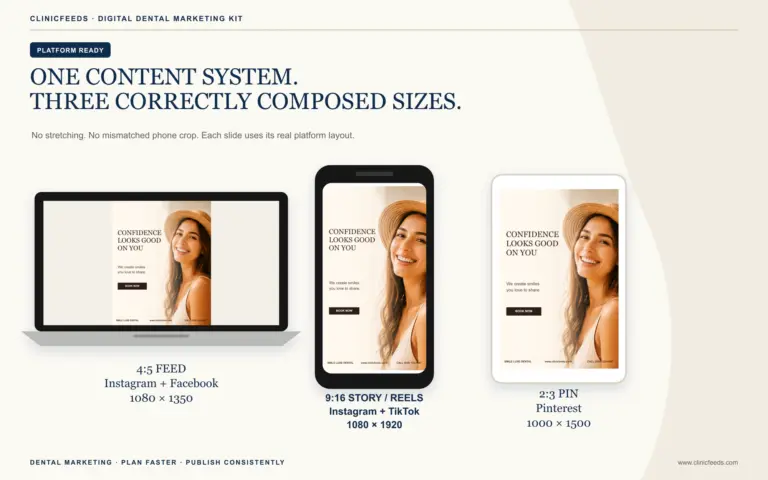
If the clinic already has approved copy and matching landing pages, the Dental Social Media Template Bundle supplies editable 4:5 and 9:16 layouts that can be adapted for paid-social tests. It does not include ad setup, targeting, media buying, landing pages, tracking or platform approval.
Frequently Asked Questions
What is the best dental advertising idea for a small practice?
A tightly focused local search campaign is often the clearest starting point because it reaches people already looking for a relevant service. Pair it with a specific landing page, staffed response process, and appointment-level measurement.
Should a dental ad send traffic to the homepage?
Usually not. A dedicated page can match the ad’s service, location, or question and give the visitor a clearer next step. The homepage is appropriate only when the ad is a broad brand-introduction campaign and the homepage supports that intent.
Are Facebook and Instagram ads suitable for dental practices?
They can support education, awareness, and practice-introduction campaigns. Targeting, creative, testimonials, patient images, and claims still require review, and health-related audience use can be restricted. Track qualified inquiries rather than treating reach or video views as the final result.
How should a dental practice measure advertising?
Measure the full path from click or call to qualified inquiry, scheduled appointment, and completed visit. Keep platform reporting, call data, and practice scheduling records aligned without collecting unnecessary sensitive information.
Can a template be used directly as a dental ad?
An editable template can speed up creative production, but the clinic must replace demonstration content, verify every service detail, choose the correct landing page, and review platform, privacy, and professional rules before publishing.
Sources and Review Date
- Google Ads policies
- Google healthcare and medicines advertising policy
- Google Ads call conversion tracking guidance
- US Federal Trade Commission guidance on endorsements, influencers, and reviews
- Royal College of Dental Surgeons of Ontario advertising guidelines
- American Dental Association marketing and advertising resources
Last reviewed: August 4, 2026. Platform and professional requirements can change; confirm current rules before launching a campaign.