
Quick Answer
Useful dental office marketing ideas should solve a real practice bottleneck: not enough qualified inquiries, weak appointment follow-through, inconsistent recall, unclear patient information or poor local visibility. Start with the bottleneck, assign one owner and track an operational result. Posting more often is not a strategy if the phone, website and schedule are not ready for the response.
For most private practices, the strongest sequence is: correct the Google Business Profile, make the website’s next step clear, standardize front-desk follow-up, build a review-request process and then publish helpful content consistently. Paid advertising can amplify this system later; it cannot repair an unclear patient journey.
Choose Marketing Ideas By The Problem You Need To Solve
Before adding another channel, identify the constraint the team can actually improve this quarter:
- Low local visibility: improve business information, service pages, local relevance and review operations.
- Plenty of inquiries but few appointments: review phone handling, form response time, scheduling language and capacity.
- Open hygiene capacity: improve recall education, reminders and appropriate reactivation workflows.
- Inconsistent content: build a repeatable calendar from questions the team already answers.
- Low trust before the first visit: explain the team, process, location, privacy practices and what patients can expect.
Record a starting baseline before the work begins. Useful measures include qualified calls, secure form requests, requested appointment type, scheduled visits, completed visits and recall response. Likes and impressions can help diagnose content performance, but they do not replace practice outcomes.
20 Practical Dental Office Marketing Ideas
1. Complete And Verify The Google Business Profile
Confirm the real-world practice name, primary category, address, phone number, website, hours and special hours. Google says complete and accurate information helps it understand relevance, while local results are also influenced by distance and prominence. Do not add keywords or service claims to the business name unless they are part of the recognized name.
Owner: practice manager. Review: monthly and whenever hours, clinicians or locations change.
2. Audit The Appointment Path On Mobile
Open the website on a phone and attempt the same task a prospective patient would: find the right service, understand whether the practice may be suitable, locate the office and request an appointment. Remove competing buttons and explain whether a form submits a request or confirms a booking.
Measure: qualified form starts, completed submissions, tap-to-call use and abandoned steps.
3. Build A Useful New-Patient Information Hub
Create one page that answers the practical questions the front desk hears every week: location, parking, accessibility, forms, arrival time, payment options, insurance participation, records and what happens after a request. Keep sensitive information out of ordinary email and social direct messages.
Align the public page with the new-patient phone script and welcome messages so patients do not receive conflicting instructions.
4. Improve One Service Page At A Time
Choose a service the practice genuinely provides and answer the decision questions around it: who may want to ask about the service, what an assessment involves, common limitations, likely steps, location and the correct next action. Avoid generic pages that repeat the city name without adding patient value.
Workflow: review one page each month with the clinician and front desk, then update facts, links and appointment language.
5. Standardize How The Front Desk Handles Marketing Calls
A marketing campaign can fail after the phone rings. Use an approved framework for greeting the caller, clarifying the reason for contact, explaining the next step accurately and documenting the source. It should guide the conversation without forcing staff to sound scripted or make clinical promises.
6. Set A Response Standard For Website Requests
Assign responsibility for checking secure appointment requests and define a response window the team can maintain. Use different messages for receipt, follow-up and confirmed scheduling. Do not let an automated acknowledgment imply that an appointment exists when it still requires staff review.
7. Create A Clear Welcome Sequence
After scheduling, send only the information patients need at each stage: confirmation, forms, directions, arrival instructions and a final reminder. Keep marketing content separate from essential care communication and apply the consent rules that govern commercial email or text in the relevant jurisdiction.
8. Review Appointment Reminder Language
Make reminders specific enough to be useful but minimal enough to protect privacy. State the date, time, location, response method and office contact route. Check every link and make cancellation or rescheduling instructions easy to find.
The dental appointment reminder examples can help the team separate operational notices from promotional messages.
9. Build A Responsible Recall And Reactivation Workflow
Segment by an appropriate operational status instead of broadcasting the same message to the entire database. Confirm contact preferences, suppress invalid addresses and provide an easy opt-out where required. Marketing staff should not infer a diagnosis or prescribe a recall interval.
10. Ask For Reviews Without Screening Or Incentives
Make the request part of a consistent post-visit process for eligible patients rather than asking only people expected to be positive. Google allows businesses to share a review link or QR code, but prohibits incentives for posting, changing or removing reviews.
Use these dental review request templates as operational starting points and have the practice approve the final wording.
11. Give Review Replies A Privacy Check
Public replies should be brief, professional and free of patient details. Do not confirm that the reviewer is a patient, discuss treatment or argue about the record. Move complex concerns to an approved private process and document who is authorized to respond.
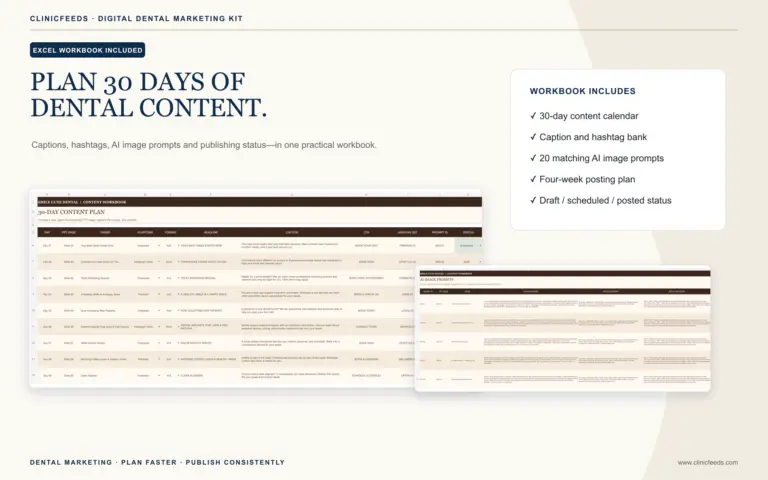
12. Turn Front-Desk Questions Into A Content Calendar
For two weeks, record recurring non-identifying questions from calls, forms and consultations. Group them into preparation, process, education, trust and next-step topics. This produces a more useful calendar than copying a competitor’s posts.
Use the dental social media content calendar workflow to assign topic, owner, reviewer, destination link and publication date.
13. Publish One Patient-Education Theme Across Several Formats
Start with one approved answer and adapt it for a website paragraph, Google Business Profile update, Instagram feed post, Story reminder and waiting-room handout. The facts stay consistent while the format and call to action change by channel.
Do not paste identical captions everywhere. A Google post may help a person confirm a practical detail, while Instagram may be better for a visual explanation and Facebook for a community-oriented update.
14. Use Instagram To Explain The Practice Experience
Show the people, environment and steps that reduce uncertainty before a visit. Useful themes include what to bring, how the team prepares a room, how to contact the office and what happens after an appointment request. Obtain appropriate permission for identifiable people and never expose patient information in the background.
Start with these dental Instagram post ideas for new patients.
15. Use Facebook For Local And Community Context
Publish verified hours, team updates, community participation, practical education and event information. Check comments for personal questions and redirect them to an approved private contact route instead of discussing care publicly.
The dental Facebook post ideas page separates community, education, trust and appointment-support themes.
16. Use Google Business Profile Posts For Timely Updates
Use updates, events or offers for information that has a real date and destination. Confirm the live button, dates and landing page before publication, then remove or revise expired information. Keep the core business description focused on the practice rather than stuffing it with promotions.
See these Google Business Profile post ideas for dentists.
17. Create A Small Patient-Education Library
Build a set of evergreen pages and handouts around preparation, prevention, common terminology and office processes. Each resource should identify who reviewed it, when it was last checked and where a patient can ask an individual question.
The patient education post ideas can help the team select topics without turning general content into personal advice.
18. Plan Promotions Around Real Capacity
Use time-bound campaigns only when dates, services, clinicians and follow-up capacity are verified. A promotion can highlight an event, scheduling window, service update or education series; it does not have to discount care.
Use the dental office promotion ideas guide for campaign concepts, approval checks and measurement.
19. Record How Each Qualified Inquiry Found The Practice
Add a simple source field to the intake workflow and allow staff to record more than one influence when appropriate. Compare self-reported source with call tracking, form analytics and landing-page data without collecting unnecessary personal information.
Review monthly: qualified inquiries, requested services, booked appointments, completed visits and operational capacity by source.
20. Hold A 30-Minute Monthly Marketing Review
Bring the practice manager, front-desk owner and content owner together. Review what changed, which questions appeared, which pages or messages need correction and where the patient journey broke down. End with three assigned actions, not a long wish list.
A Practical 90-Day Implementation Order
Days 1–30: Fix The Foundation
- verify the Google Business Profile and business information;
- test the mobile appointment path;
- standardize phone and form response;
- record baseline inquiry and appointment data.
Days 31–60: Improve Trust And Follow-Through
- publish or update the new-patient information hub;
- implement the review request and reply workflow;
- review reminders, welcome messages and recall communication;
- improve the highest-priority service page.
Days 61–90: Build A Repeatable Content System
- create a four-week calendar from real patient questions;
- adapt each approved theme by platform;
- link posts to relevant website resources;
- review results and select the next operational bottleneck.
How To Measure Dental Office Marketing
Use a short measurement chain instead of a large dashboard:
- Visibility: qualified local impressions, profile interactions and visits to relevant pages.
- Intent: calls, secure forms, directions and appointment requests.
- Operations: response time, requested appointment type, scheduling outcome and capacity.
- Business outcome: completed visits and appropriate ongoing care—not just leads.
Compare results by month and by campaign, but record operational context. A drop in appointments may reflect unavailable capacity, broken follow-up or seasonal behavior rather than weak content.
US And Canada Review Checklist
- Verify every clinical, fee, availability and comparison claim before publication.
- Use accurate professional titles and confirm advertised services at the named location.
- Obtain appropriate authorization for identifiable patient images, stories or testimonials.
- Do not buy, fabricate, suppress or incentivize reviews.
- Keep protected or sensitive information out of public replies, social comments and ordinary intake fields.
- For Canadian commercial email or text, confirm the applicable consent, identification, unsubscribe and record-keeping requirements under CASL.
- Apply state, provincial, professional and privacy requirements; have the practice’s qualified adviser review uncertain cases.
Choose A ClinicFeeds Content System
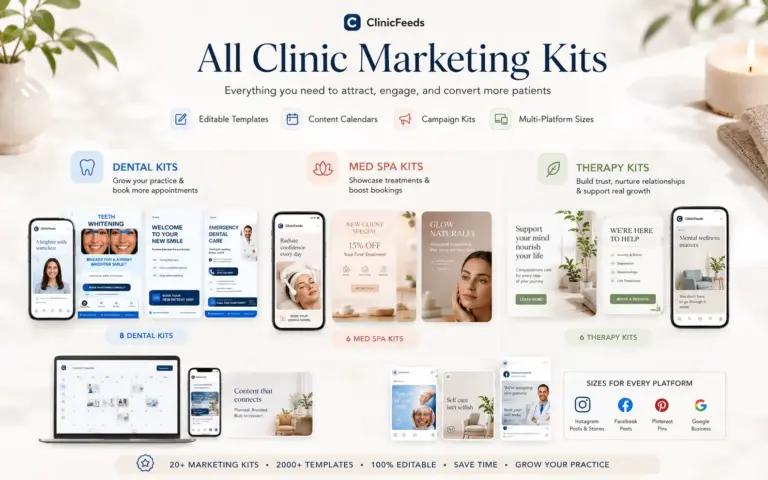
- First-visit trust and booking preparation: New Patient Welcome Campaign Kit.
- Recall, prevention and gum-health education: Dental Hygiene & Gum Health Kit.
- Broader evergreen and seasonal publishing: Smile Luxe Dental Social Media Template Kit.
Frequently Asked Questions
Which Dental Office Marketing Idea Should We Start With?
Start with the clearest operational bottleneck. If people cannot find accurate hours or contact details, fix the Business Profile. If inquiries are not becoming appointments, review the response path before publishing more content.
Does A Dental Office Need To Post Every Day?
No. A smaller schedule of accurate, useful posts is more sustainable than daily filler. Choose a frequency the team can review, publish and maintain without sacrificing patient communication.
Can The Front Desk Manage Dental Marketing?
Front-desk insight is valuable because the team hears real questions. Assign clear tasks and approval boundaries, but do not expect staff to approve clinical claims or manage every channel without time and training.
Do These Ideas Work Without Paid Advertising?
Yes. Business information, website clarity, reviews, patient communication and consistent educational content can all improve the patient journey without ad spend. Paid advertising is a separate acquisition tool and should be measured against completed business outcomes.
How Much Should A Dental Office Spend On Marketing?
There is no universal percentage that fits every practice. Base the budget on capacity, service mix, market, tracking ability and the value of an appropriate completed visit. Do not increase spend until the team can respond and attribute outcomes.
What Is The Most Important Dental Marketing Metric?
Use the metric closest to the practice goal: qualified inquiries, scheduled appointments, completed visits or appropriate recall response. Track supporting metrics only when they help explain that result.
Sources And Review Notes
- Google Business Profile Help: Tips To Improve Local Ranking
- Google Business Profile Help: Guidelines For Representing Your Business
- Google Business Profile Help: Tips To Get More Reviews
- Federal Trade Commission: Endorsements, Influencers And Reviews
- Government Of Canada: Getting Consent To Send Commercial Email
- RCDSO: Advertising Guidelines
Last reviewed: July 25, 2026.