Quick Answer
Dental hygiene social media content should help patients understand cleaning visits, gum-health conversations, preventive care, and the next appropriate step. The 30 ideas below are designed for public Instagram, Facebook, and Pinterest content. They are not individual appointment reminders or clinical instructions, and every practice should review the wording against its actual services and local requirements before publishing.
In this guide, a recall-awareness campaign means general public content that encourages people to review the care interval recommended by their own dental professional. It does not mean contacting an identifiable patient based on information in the practice record. For one-to-one texts, emails, confirmations, and rescheduling messages, use these dental appointment reminder templates instead.
Choose the Job of the Post First
Before choosing a template or photograph, give the post one clear job:
- Explain what may happen during a hygiene or preventive visit.
- Make one gum-health topic easier to understand.
- Help patients prepare a useful question for the dental team.
- Reduce embarrassment about returning after a gap in care.
- Encourage the public to review an individually recommended care interval.
- Direct interested readers to accurate practice information or a monitored contact route.
A post that tries to educate, promote an offer, introduce the team, and request an appointment at the same time usually does none of those jobs well.
30 Dental Hygiene Social Media Post Ideas
Cleaning and Hygiene Visit Content
-
Explain what a routine hygiene visit may include. Build the post from the real workflow in your practice. A simple outline might cover arrival, an update of relevant information, an assessment, the cleaning process, a conversation with the dental team, and the next recommended step. Do not imply that every patient receives the same services.
Format: 4:5 feed post. CTA: “See what to expect at a hygiene visit in our practice.”
-
Introduce the hygienist by role, not with a generic biography. Explain the questions the hygienist helps patients work through, such as home-care challenges, gum-health concerns, preventive routines, and follow-up planning.
Format: Three-frame 9:16 Story. CTA: “Bring your oral-health questions to your next visit.”
-
Create a visit-preparation checklist. Include only steps that match your office process: complete requested forms, bring relevant information, and make a note of questions or changes the team should discuss. Tell readers not to share private health information in public comments or social direct messages.
Format: 2:3 saveable Pinterest Pin. CTA: “Review our appointment information before your visit.”
-
Welcome people returning after a long gap. Explain the first step without shame-based wording or assumptions about why someone postponed care. A calm post can be more useful than another “you are overdue” graphic.
Format: 4:5 feed post. CTA: “Contact the practice if you would like to discuss returning to care.”
-
Share five questions to ask at a hygiene visit. Use questions your team genuinely hears. Examples might cover home-care tools, sensitivity, dry mouth, a change the patient has noticed, or the reason for a recommended follow-up interval.
Format: 2:3 checklist Pin. CTA: “Save these questions for your next conversation with the dental team.”
-
Explain why preventive intervals are not identical for everyone. Make it clear that timing is based on an individual assessment rather than a universal social media rule. Avoid assigning every reader a six-month schedule.
Format: 4:5 educational post. CTA: “Ask your dental professional which interval has been recommended for you.”
-
Feature one tool or step used during a hygiene visit. Photograph the tool away from patient information and explain its purpose in plain language. Ask the clinician to verify the description before the post enters the calendar.
Format: 9:16 Story sequence. CTA: “Have a question about your visit? Ask the team directly.”
-
Answer one hygiene myth with context. Select a narrow misconception the practice can answer accurately. Name the source used during review and avoid sensational “everything you know is wrong” language.
Format: 4:5 myth-and-context post. CTA: “Speak with your dental professional about guidance that fits your situation.”
Gum-Health Content
-
Explain why gums are part of oral health. Introduce the subject without turning a symptom list into a self-diagnosis tool. The post can explain why your team asks gum-health questions and what patients can discuss during a visit.
Format: 4:5 feed post. CTA: “Learn what our team reviews during a gum-health conversation.”
-
Address bleeding gums as a reason to ask, not a diagnosis. Acknowledge the question, avoid assigning a cause online, and direct persistent or individual concerns to an appropriate dental professional.
Format: 9:16 question-and-answer Story. CTA: “If you have noticed a change, contact a dental professional for individual guidance.”
-
Explain gum measurements at a high level. Describe what the team is monitoring and why the findings need professional context. Do not invite followers to interpret measurements or select care from a social post.
Format: 2:3 explainer Pin. CTA: “Ask the team to explain what your findings mean for your care plan.”
-
Clarify that routine cleaning and periodontal maintenance are not interchangeable. Explain that different recommendations may serve different clinical needs without telling a reader which appointment they require.
Format: 4:5 comparison post. CTA: “Your dental team can explain the recommendation made for you.”
-
Publish a gum-health conversation checklist. Instead of a risk calculator, list information a practice may ask about, such as health-history changes, medications, tobacco use, or home-care challenges. Remind readers to share personal details through an approved private channel.
Format: 2:3 checklist Pin. CTA: “Tell your dental team about changes that may be relevant to your care.”
-
Answer one real gum-health FAQ. Ask a hygienist or dentist to select a recurring question and approve a concise answer. If the answer depends heavily on the individual, say so instead of forcing a universal conclusion.
Format: 4:5 FAQ post. CTA: “Bring individual questions to your own dental professional.”
-
Build a three-post Gum Health Month sequence. Post one can explain why the practice discusses gum health. Post two can outline what an assessment may involve. Post three can show how to begin a conversation with the team. Confirm the campaign timing and final clinical wording before scheduling all three.
Format: 4:5 feed series with 9:16 Story recaps. CTA: “Explore our gum-health information or contact the practice with questions.”
Preventive-Care Content
-
Show that prevention is a system, not one isolated habit. Explain how home routines, professional assessment, and an individual plan work together. Do not suggest that one product or habit prevents every dental problem.
Format: 4:5 diagram-style post. CTA: “Ask which preventive priorities apply to you.”
-
Explain why the team asks about changes since the last visit. Changes in health history, medications, symptoms, or routines may be relevant to a dental conversation. Tell readers where the practice accepts private updates rather than asking for them in comments.
Format: 9:16 Story. CTA: “Share private health information only through the practice’s approved process.”
-
Explain why examination and imaging timing can vary. Keep the post focused on individual need and professional judgment. Do not publish a fixed schedule as though it applies to every patient.
Format: 4:5 educational post. CTA: “Ask why a particular schedule has been recommended for you.”
-
Introduce interdental-care options without choosing one for the reader. Show that several tools exist and that technique, dexterity, clinical needs, and professional guidance can affect the choice. Verify any product wording and disclose material relationships.
Format: 2:3 comparison Pin. CTA: “Ask a dental professional which option suits your needs and technique.”
-
Create a dry-mouth conversation starter. Give readers questions to prepare rather than a treatment plan: When did the change begin? Is it persistent or occasional? What health or medication information should be discussed privately?
Format: 2:3 saveable Pin. CTA: “Discuss persistent concerns with an appropriate health professional.”
-
Publish a sports mouthguard awareness post. Explain when your practice commonly discusses mouthguards and what a consultation may cover. Avoid claiming that one design is appropriate for every person or activity.
Format: 4:5 seasonal post. CTA: “Contact the practice if you want to ask about available options.”
-
Run a family oral-health routine reset. Use a non-shaming seasonal prompt to review routines, check supplies, and prepare questions for upcoming visits. Every instructional statement should come from a source approved by the practice.
Format: 9:16 Story checklist. CTA: “Choose one manageable routine to review this week.”
-
Answer one food-or-drink question. Select a narrow topic, use evidence-based wording, and have a clinician review it. Avoid restrictive diet plans or claims that one food causes or prevents a condition.
Format: 4:5 FAQ post. CTA: “Ask your dental professional how general guidance relates to your situation.”
-
Create a preventive-visit question checklist. Include changes the team should know about, home-care questions, new or persistent concerns, the reason for a recommended follow-up interval, and where to find the practice’s after-visit information.
Format: 2:3 Pinterest Pin. CTA: “Save the checklist and bring it to your next conversation.”
Public Recall-Awareness Campaign Content
-
Ask readers whether their recommended hygiene interval is approaching. Keep the wording general. Do not state or imply that the practice has reviewed a particular follower’s record.
Format: 4:5 feed post. CTA: “Check the plan provided by your dental professional or contact the practice.”
-
Publish a seasonal appointment-planning post. Use a genuine operational reason, such as school schedules, travel periods, or holiday hours, to help the public plan ahead. Confirm actual availability with the front desk before the post is scheduled.
Format: 9:16 Story. CTA: “View current hours or contact the front desk for availability.”
-
Explain dental-benefit planning without making a coverage promise. Remind readers to review their own plan and confirm benefits, eligibility, and limits directly with the insurer or benefits administrator.
Format: 4:5 information post. CTA: “Confirm benefits and eligibility directly with your plan.”
-
Publish an “it has been a while” welcome message. Acknowledge that people postpone care for many reasons. Explain the first contact step at your practice without predicting the examination findings or treatment plan.
Format: 4:5 trust post. CTA: “Contact the practice when you are ready to ask about next steps.”
-
Show what a new-patient hygiene visit looks like at your office. Link to current forms, arrival details, accessibility information, and booking options. Use only details that match the real front-desk workflow.
Format: 2:3 planning Pin or 4:5 feed post. CTA: “Review our new-patient information before requesting an appointment.”
-
Run a three-post public recall-awareness sequence. First, explain why preventive conversations matter. Second, show what a hygiene visit may include. Third, invite readers to review their own recommended plan or contact the practice. Do not use public content to reveal that a named or identifiable person is overdue.
Format: 4:5 feed sequence with 9:16 Story adaptations. CTA: “Review your recommended plan or contact the practice with questions.”
A Practical Four-Week Dental Hygiene Content Plan
A small practice does not need 30 unrelated posts in one month. Start with one approved theme each week, then adapt it for the platforms the team actually maintains.
| Week | Campaign focus | 4:5 feed post | 9:16 Story | 2:3 Pinterest Pin |
|---|---|---|---|---|
| Week 1 | Cleaning confidence | What a hygiene visit may include | Meet the hygienist by role | Visit-preparation checklist |
| Week 2 | Gum health | Why gums are part of oral health | Bleeding gums: ask, do not self-diagnose | Gum-health conversation checklist |
| Week 3 | Preventive care | Prevention is a system | Changes to share privately with the team | Preventive-visit question checklist |
| Week 4 | Recall awareness | Returning after a gap | Seasonal appointment planning | New-patient hygiene visit overview |
Assign one person to prepare the draft and one appropriate reviewer to verify clinical wording, office details, images, availability, and calls to action. For the wider monthly workflow, use the 30-day dental social media content calendar.
Adapt One Approved Topic to 4:5, 9:16, and 2:3
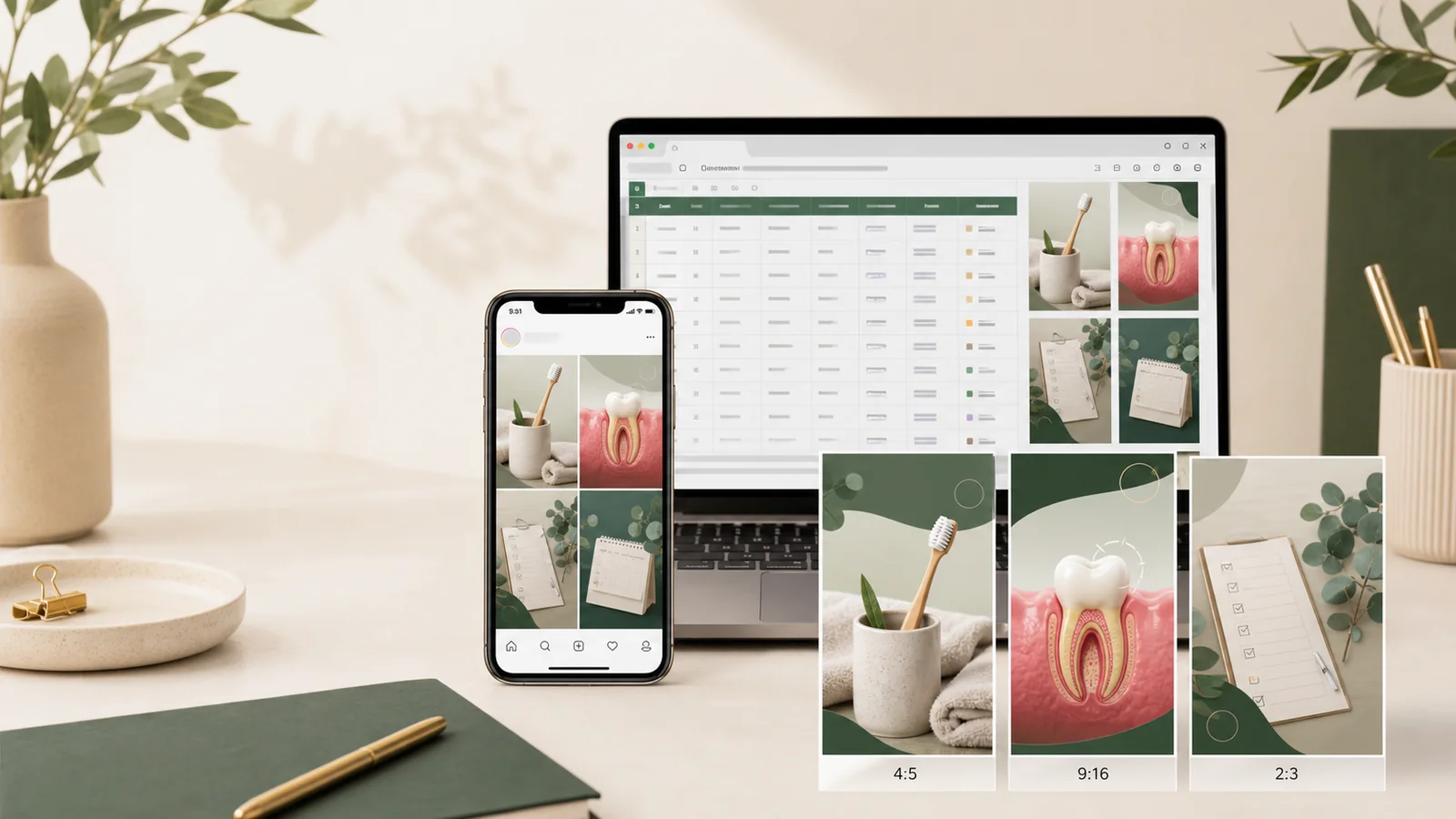
One approved topic can support three platform-ready assets, but the layouts should not be identical.
4:5 Instagram and Facebook Feed
Use a 1080 × 1350 px layout for one clear message. Keep detailed context in the caption instead of filling the image with clinical text. The Facebook version can add office-specific or local context while keeping the approved visual concept.
9:16 Instagram Story or Reels Cover
Use a 1080 × 1920 px layout and divide the subject into three frames: a patient question, a short practice-approved explanation, and a next step. Keep important text away from the top and bottom interface areas.
2:3 Pinterest Pin
Use a 1000 × 1500 px layout for evergreen, saveable material such as a checklist or visit guide. Link the Pin to the most relevant information page rather than automatically sending every reader to the homepage.
The message can remain consistent across the three formats, but the amount of context, visual hierarchy, and CTA should fit the platform. See the full Instagram, Facebook, and Pinterest repurposing workflow.
US and Canada Publishing Review
Templates organize the workflow; they do not make a practice compliant by themselves. Before a hygiene campaign goes live:
- Have an appropriate clinician review factual and clinical statements.
- Avoid guaranteed outcomes, universal treatment schedules, and unsupported superiority claims.
- Do not diagnose a follower from a comment, photograph, or symptom description.
- Do not expose patient names, appointment status, treatment details, or other identifiable health information.
- Use an appropriate written authorization or meaningful consent process before publishing identifiable patient material.
- Confirm that testimonials are genuine and that material relationships or incentives are disclosed where required.
- Verify promotion terms, fees, benefit-plan wording, office hours, and appointment availability.
- Check the rules of the applicable US state dental board or Canadian provincial or territorial dental regulator.
In the United States, HHS explains how the HIPAA Privacy Rule applies when protected health information is used or disclosed for marketing. The ADA advises practices to review state rules and avoid materially false or misleading advertising, while the FTC requires endorsements and testimonials to be truthful and appropriately disclosed. See the HHS marketing guidance, ADA marketing and advertising guidance, and FTC endorsement guidance.
In Canada, consent and health-information requirements can depend on federal, provincial, and territorial law. The Office of the Privacy Commissioner explains that meaningful consent requires people to understand what is collected, why it is used, and with whom it is shared. Ontario’s RCDSO guidance is one regulator example; practices should check the rules that apply in their own jurisdiction. See the OPC consent guidance, RCDSO professional social media guidance, and Canadian Dental Association oral-health resources.
For additional guidance on turning clinical topics into clear public education, see these dental patient education post ideas. This article provides marketing workflow guidance, not medical or legal advice.
Frequently Asked Questions
What should a dental hygienist post on social media?
Useful topics include what a hygiene visit may involve, gum-health questions, preventive-care conversations, home-care questions, and non-judgmental recall awareness. Posts should educate the public without diagnosing followers or replacing individualized guidance.
How often should a dental practice publish hygiene content?
There is no universal schedule. One or two hygiene themes within a balanced monthly calendar may be enough for many practices. Frequency should reflect real patient questions, current campaign priorities, and review capacity. Use the capacity-based dental social media posting guide when setting the wider clinic cadence.
Can the same dental hygiene post be used on Instagram, Facebook, and Pinterest?
The same approved idea can be adapted, but the asset should fit the platform. Use 4:5 for Instagram and Facebook feeds, 9:16 for Stories or Reels covers, and 2:3 for evergreen Pinterest Pins.
Can a dental practice publish recall posts on social media?
A practice can publish general recall-awareness content. It should not reveal or imply that an identifiable follower is overdue. Individual texts, emails, and calls should use the practice’s approved private communication workflow.
Are dental hygiene templates automatically HIPAA-compliant?
No. Compliance depends on the wording, images, patient information, authorization, access controls, and publishing process used by the practice. A template cannot evaluate or approve those decisions.
Can a practice use patient photographs or testimonials?
Only after confirming the required authorization, consent, disclosure, and professional rules for the applicable jurisdiction. A social media comment or informal verbal agreement should not automatically be treated as permission to reuse patient information in marketing.
Which ClinicFeeds product supports dental hygiene campaigns?
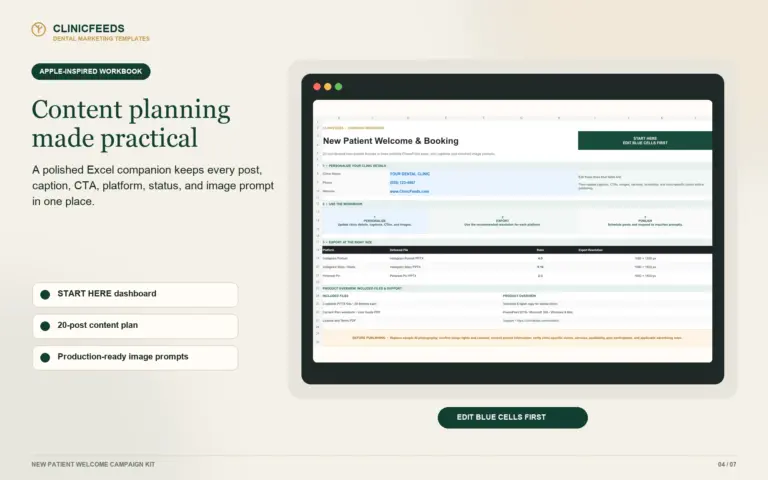
The Dental Hygiene & Gum Health Social Media Campaign Kit includes editable 4:5, 9:16, and 2:3 PowerPoint layouts, an Excel content plan, and PDF guidance for one licensed practice.
Sources and Review Notes
- U.S. Department of Health and Human Services: Marketing and the HIPAA Privacy Rule
- American Dental Association: Marketing and Advertising
- Federal Trade Commission: Advertisement Endorsements
- Office of the Privacy Commissioner of Canada: Meaningful Consent
- Royal College of Dental Surgeons of Ontario: Professional Use of Social Media
- Canadian Dental Association: Dental Care and Oral-Health Resources
Last reviewed: July 28, 2026.